The RAM shortage now showing up in quotes and lead times is easy to describe as another AI side effect. That is true, but incomplete. The problem is not that data centers simply bought every available memory module. Manufacturers changed what they produce because AI memory is where the demand and the margins are.
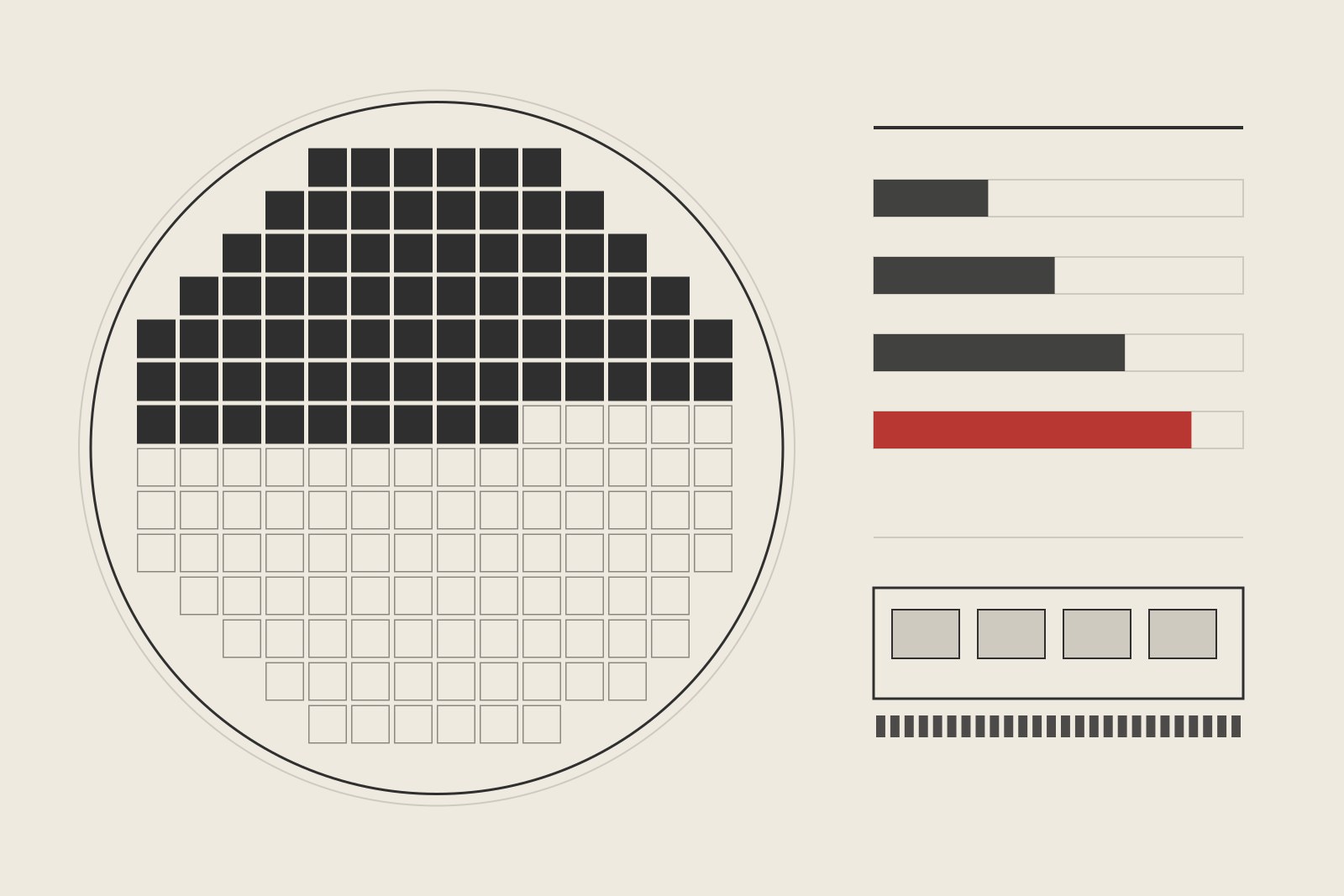
AI accelerators need high-bandwidth memory, usually shortened to HBM. A normal laptop or industrial computer uses a different type of memory, but both products depend on the same limited pool of cleanroom space, wafer starts, equipment, and engineering capacity. More HBM therefore means less room for conventional DRAM. Micron put a number on it at Hot Chips this year: making the same quantity of bits as HBM3E takes roughly three times the wafer supply that DDR5 needs, and the ratio gets worse with HBM4. Every production decision now carries an opportunity cost.
The demand is also broader than training large models. Cloud providers are building systems for inference, storage, and ordinary server work around those models. Micron told investors it expects data-center memory and storage shipments in calendar 2026 to more than double their level two years earlier. Samsung expects demand for server DRAM and HBM to keep the market undersupplied through the second half of 2026.
Prices moved before many buyers understood why. TrendForce forecast conventional DRAM contract prices rising by 55 to 60 percent in the first quarter of 2026 as suppliers moved capacity toward server products and HBM. That does not mean every RAM kit became 60 percent more expensive at retail. It does show how quickly the balance of power shifted toward producers.
This matters outside the companies building AI clusters. PC makers, phone manufacturers, industrial equipment suppliers, and automotive businesses all buy from the same concentrated memory industry. A data-center customer can reserve capacity through a large, long-term agreement. A smaller manufacturer ordering memory for control equipment cannot compete on the same terms. It receives a higher quote, a smaller allocation, or a later delivery date.
New factories will help, but not soon. Cleanrooms take years to build. New process nodes need time to reach stable yields. Micron's large US expansions, for example, add meaningful output over several years rather than several quarters. The shortage can ease before every new fab opens, especially if AI investment slows, but procurement teams should not build a 2026 plan around that hope.
The practical response is less dramatic than the headlines. Map which products depend on a single memory specification. Approve alternative modules before the preferred part disappears. Separate firm demand from optimistic forecasts before asking a supplier for an allocation. For older industrial products, check whether a redesign costs less than repeatedly buying scarce legacy memory on the spot market.
Hoarding is not a strategy. It moves the shortage into somebody else's warehouse and leaves you exposed when prices turn. Memory has always been cyclical, and today's seller's market will not last forever. What pays off is knowing which parts can stop a line before the market decides to show you.